
Automotive electronic systems must operate reliably despite electrical, thermal and environmental stresses. Component selection therefore involves more than checking nominal electrical specifications. Engineers must also consider qualification status, operating conditions, application risks and the documentation supplied for the electronic components they select.
The Automotive Electronics Council (AEC) publishes qualification requirements widely used throughout the automotive electronics industry. Two of the main standards are AEC-Q100, for integrated circuits, and AEC-Q101, for discrete semiconductor devices.
Although the two standards have a similar purpose, they apply to different types of components. Understanding that distinction is important when assessing whether a device is suitable for a particular automotive application.
What Is AEC-Q100?
AEC-Q100 defines stress-test qualification requirements for automotive integrated circuits (ICs). Its purpose is to assess how a device responds to relevant failure mechanisms and environmental stresses.
Depending on the device and the qualification requirements that apply, testing may cover temperature cycling, humidity, electrical stress and other reliability-related conditions.
AEC-Q100 also defines temperature grades based on ambient operating-temperature ranges. The required grade should be checked against both the relevant revision of the standard and the documentation for the specific device.
Qualification to AEC-Q100 provides useful evidence of an IC’s robustness, but it does not remove the need for application-level engineering or system validation. The designer must still confirm that the component’s ratings and characteristics are suitable for the conditions in which it will operate.
What Is AEC-Q101?
AEC-Q101 defines qualification requirements for discrete semiconductor devices intended for demanding applications, including automotive electronics. Unlike AEC-Q100, which applies to integrated circuits, AEC-Q101 focuses on individual semiconductor devices rather than complete integrated circuits.
Discrete semiconductors include diodes and transistors, such as rectifier diodes, Zener diodes, bipolar junction transistors (BJTs) and metal-oxide-semiconductor field-effect transistors (MOSFETs). Depending on the device technology and the applicable qualification requirements, the scope also encompasses other discrete semiconductor device types.
These components perform essential functions in automotive electronic systems, including rectification, switching, voltage regulation, power conversion and signal conditioning. For example, a power MOSFET may switch current in an automotive power circuit, while a diode may provide rectification or protection against voltage transients.
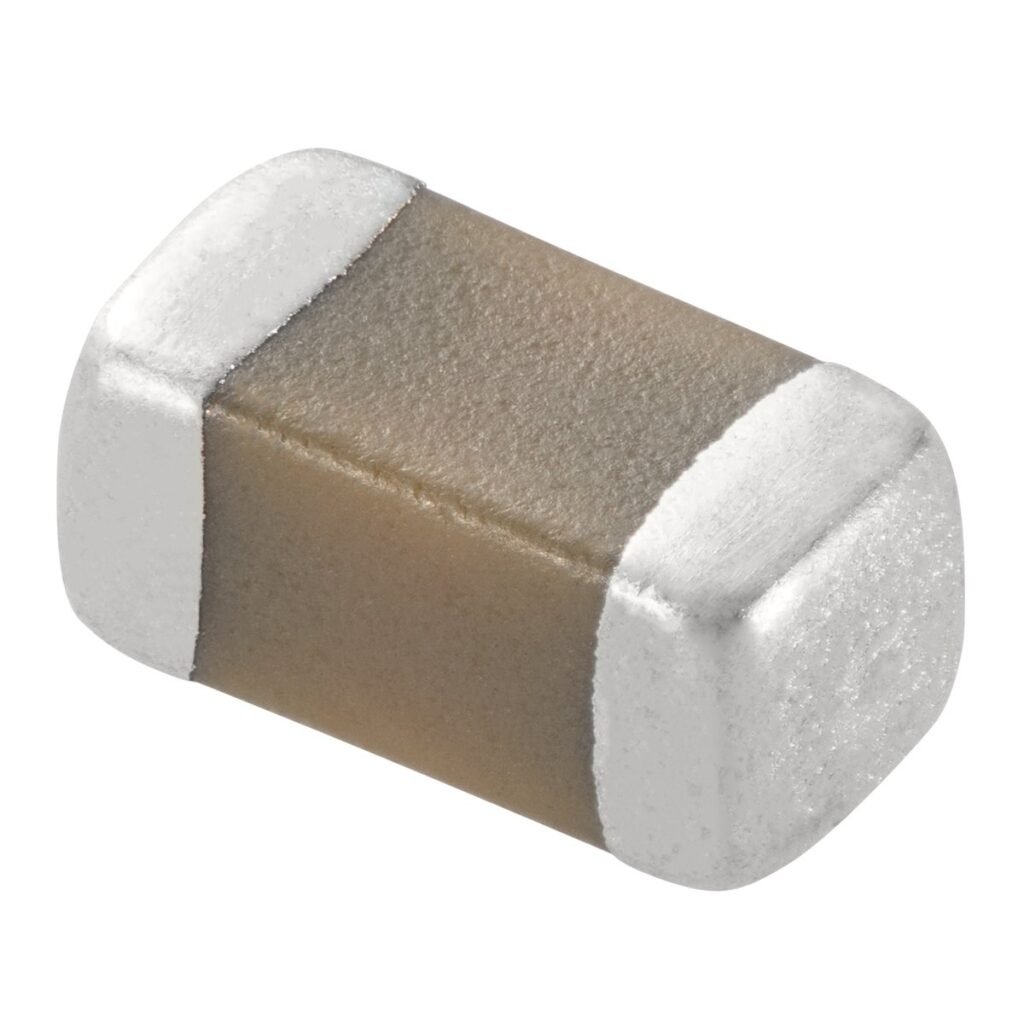
It is important to distinguish discrete semiconductors from passive components, such as resistors, capacitors and inductors. These are not covered by AEC-Q101; passive electronic components are addressed by the AEC-Q200 qualification series.
AEC-Q101 qualification involves a set of stress tests intended to evaluate relevant failure mechanisms and the device’s ability to withstand defined electrical and environmental conditions. The applicable tests depend on the device type, construction and qualification requirements.
As with AEC-Q100, qualification status should be verified for the exact manufacturer part number and supported by the relevant documentation. Engineers should also review the datasheet, operating limits and application-specific requirements. Qualification alone does not guarantee suitability for every automotive environment or replace system-level validation.
AEC-Q100 vs AEC-Q101
The main difference is the type of semiconductor device covered.
| Feature | AEC-Q100 | AEC-Q101 |
|---|---|---|
| Main device category | Integrated circuits | Discrete semiconductor devices |
| Typical examples | Control ICs, interface ICs and other automotive integrated circuits | Diodes, transistors and other covered discrete devices |
| Qualification focus | Reliability testing of integrated circuits | Reliability testing of discrete semiconductor devices |
| Application relevance | Depends on the IC’s function and the system requirements | Depends on the discrete device’s function and the system requirements |
Neither standard guarantees that a component will operate correctly in every automotive environment. Qualification evidence must be reviewed for the exact part number, and the component must still be assessed against the electrical, thermal and environmental demands of the application.
Why Automotive Semiconductor Qualification Matters
Automotive electronics may be exposed to temperature changes, humidity, vibration, electrical transients and long operating periods. The severity of these stresses varies with the component’s location, the vehicle architecture and the system in which it is installed.
Qualification testing provides a consistent basis for assessing device robustness and supports both component-selection and reliability-engineering decisions.
Engineering and purchasing teams should consider:
- The exact manufacturer part number and device revision.
- The qualification standard and revision used.
- The manufacturer’s documented qualification status and supporting evidence.
- The specified operating-temperature range and electrical limits.
- The package, mounting conditions and intended use of the component.
- Availability, traceability and change-control information, where required.
An AEC qualification claim is therefore an important part of the selection process, but it should not be treated as a substitute for technical verification.
AEC Qualification and Component Reliability
AEC qualification provides a common framework for evaluating recognised reliability-related failure mechanisms. It allows manufacturers and customers to establish whether a component has completed the required qualification testing.
Passing these tests does not, however, establish a universal field-failure rate or guarantee zero failures. Nor does it prove that a device is suitable for every operating condition.
Field reliability also depends on device design, manufacturing quality, electrical and thermal loading, assembly processes and the design of the system in which the component is used.
Any quantitative reliability claim should be supported by appropriate evidence, such as test results or field-return data. Failure-rate figures should always be considered together with their operating assumptions, test conditions and statistical basis.
What About Passive Components? AEC-Q200
Not every automotive electronic component falls under AEC-Q100 or AEC-Q101.
AEC-Q200 covers passive electronic components. Depending on the component category and the requirements involved, this may include capacitors, resistors, inductors and other passive devices.
This distinction is important during component selection. An integrated circuit, a discrete semiconductor and a ceramic capacitor may all be intended for use in the same automotive system, but each may be assessed under a different AEC standard.
The relevant standard should therefore be verified for the particular component type and part number.
How to Select an Automotive Semiconductor
A structured review makes it easier to distinguish a general product claim from documented qualification evidence.
- Identify the exact manufacturer part number and device revision.
- Determine which qualification standard applies to that type of device.
- Review the manufacturer’s datasheet and qualification documentation.
- Check the operating-temperature range, electrical ratings and relevant application limits.
- Confirm that the package and mounting requirements are compatible with the assembly process and operating environment.
- Determine whether system-level testing or additional validation is required.
For critical applications, the review may also need to include traceability, change-notification arrangements and manufacturer-specific reliability data.
Conclusion
AEC-Q100 and AEC-Q101 serve the same broad purpose but cover different semiconductor categories. AEC-Q100 applies to integrated circuits, while AEC-Q101 applies to discrete semiconductor devices.
Qualification status is only one part of component selection. Engineers and buyers should verify the exact part number, review the manufacturer’s supporting documentation and confirm that the component’s ratings match the real conditions of the application.
For safety-critical or otherwise demanding applications, always verify the current qualification documentation and the requirements applicable to the final system.